
Witchcraft 101: 9 Tips for a Solitary Practice (Beginner’s Guide)

[Updated September 2025]
When I first started practicing witchcraft, I did it alone. Not because I didn’t want community (I did!) but because I didn’t know where to look, who to trust, or even if I was “doing it right.” If you’ve ever felt that way, you’re not alone.
Many modern witches walk the path of solitary witchcraft—choosing to practice without a coven or formal initiation. Sometimes this is by choice; sometimes it’s simply the only option. Either way, it’s a valid, beautiful, and empowering path.
Solitary witchcraft requires self-trust, creativity, and persistence. You become your own teacher, your own guide, and your own magical experimenter. That can feel daunting at first, but it’s also what makes this path so rewarding: your practice is entirely yours.
If you’re starting out as a solitary or self-initiated witch, here are nine tips to help you find your footing and embrace this journey.

1️⃣ Solitary Witches Aren’t Truly Alone
When I first started, I thought I had to figure everything out from scratch. But one night, while scrolling on YouTube, I stumbled upon a witch sharing her full moon ritual. I tried it at the next full moon, adapting it to what I had on hand, and that’s when I realized, I’m not alone. I was learning from someone across the world who had generously shared her practice. That tiny spark made me braver and encouraged me to keep going, and eventually share my practice as well.
It might feel like you’re practicing in isolation, but resources are everywhere. From books and blogs to YouTube, podcasts, and online communities, you’ll find guidance at your fingertips. Many practitioners generously share their knowledge, offering lessons, rituals, and inspiration.
✨ My tip: Don’t just stick to one source. Cross-reference what you learn, compare different perspectives, and notice what resonates. Some sources may contradict each other, and that’s okay—witchcraft has never been one-size-fits-all.
And remember, intuition is one of your most powerful tools. If something feels off, trust that instinct.
2️⃣ Clarify Your Intentions
Ask yourself: Why am I drawn to solitary practice?
Your answer might be freedom, privacy, or self-discovery. Or maybe it’s circumstance—you don’t have access to a coven, or organized groups don’t appeal to you. Whatever your reason, name it.
Intentions anchor your practice. They’ll help you check in with yourself along the way: Is this practice feeding me? Is it helping me heal, grow, or connect? If not, it’s okay to reevaluate. Your “why” may evolve, just as you do.
🌙 Ritual Idea: Write your intention on a small piece of paper and fold it three times. Place it under a white candle, and as the candle burns, say out loud: “This is why I walk this path.” Keep the paper in your journal or grimoire to revisit later.
3️⃣ Gather Your Resources
One of the most powerful things you can do as a solitary witch is become a curious learner. Read widely. Study traditions from different cultures, time periods, and perspectives. Balance old folk practices with modern interpretations.
But don’t just consume—apply. Try out a ritual, keep notes on your results, and decide what works for you. Witchcraft is experiential; reading alone won’t build your craft.
✨ Tip for beginners: Start with one book or resource at a time. Too much at once can lead to overwhelm.
And don’t worry, there’s no single “correct” source of witchcraft. Every book, blog, or podcast is one person’s perspective. If something doesn’t resonate, set it aside. Trust your discernment; you’ll find the gems meant for you.
4️⃣ Adapt Without Losing Context
As a solitary witch, you get to shape your own practice. That means adapting rituals, spells, and traditions to fit your life.
But—context matters. If you borrow from another culture or tradition, do the work to understand its origins. Honor where practices come from, and avoid cultural appropriation by respecting closed traditions (for example, Indigenous ceremonies or African Diaspora religions that require initiation).
Related: What is Cultural Appropriation?
Adaptation doesn’t mean cherry-picking; it means incorporating practices into your life in a thoughtful and respectful way.
🌙 Ritual Idea: When you learn a new practice from another culture, light a candle and take a moment to honor its origins. Speak aloud your gratitude to the people who carried that tradition. Then write in your journal: “How can I respectfully adapt this to my own practice?”
5️⃣ Keep Track of Your Sources
This is where your grimoire or journal becomes invaluable. Write down what you learn, where it came from, and what you thought of it. Later, when you want to revisit or expand on something, you’ll know exactly where to look.
I learned this the hard way early in my practice. I wrote a spell in my grimoire, but didn’t note where I’d found the inspiration. Months later, when I wanted to revisit it to check something, I couldn’t remember where I had seen it. I now make it a habit to jot down sources in the margin of my journal. It makes returning to and building on my work so much easier.
Giving credit to your sources isn’t just ethical—it’s practical. And it helps you notice whose voices you’re learning from. Strive for diversity in terms of race, gender, background, and perspective. Witchcraft is richer when it reflects many voices.
6️⃣ Document Your Core Beliefs
Early on in your practice, take time to write down what you believe: about magic, spirit, the divine, and your role as a witch. Don’t overthink it; this isn’t set in stone.
Date it, sign it, and tuck it into your journal or grimoire. Revisit it once a year (Samhain is a popular choice, but you could also pick the New Year, your birthday, or the astrological new year at Aries season).
Related: What is a Grimoire? and How to Keep Your Own
As you grow, you’ll see what’s shifted, what’s stayed the same, and how your path is evolving. This yearly reflection becomes a map of your spiritual growth.
Growth is a sign your practice is alive. What you write today is simply a snapshot of who you are now. In the future, you will be grateful for the record of your journey.
7️⃣ Don’t Compare Yourself to Others
This one is huge. Solitary practice can sometimes feel like you’re “behind” others who seem to know more, have prettier altars, or are part of a thriving coven. But comparison steals your joy.
Your path is yours. It doesn’t have to look like anyone else’s. Progress isn’t about how many crystals you own or how aesthetic your altar looks on Instagram. It’s about authenticity.
Stay focused on sincerity, creativity, and self-trust. That’s what makes your practice powerful.
🌙 Ritual Idea: Before scrolling social media, draw a small heart on your wrist with a washable marker or eyeliner. Each time you notice comparison creeping in, touch the heart and repeat: “My path is mine. My magic is enough.”
8️⃣ Approach Your Craft as a Healing Path
When my grandma passed away, I felt untethered. Nothing I read in books or had experienced up to that point could tell me how to process that kind of grief. So, I lit a candle for her, brewed a pot of tea, and sat in silence, thinking about her and my grandpa.
That small ritual didn’t erase my pain, but it gave me a way to carry it differently. It was one of the first times I realized witchcraft could be more than spells. It could be about transformation.
Solitary practice in particular can be deeply healing because it encourages self-reflection. Notice how your rituals evolve as you grow. Document your healing. See how your magic shifts as you become more whole. Witchcraft is a mirror: it reflects your wounds, your growth, and your power back to you.
9️⃣ Consider Sharing with Others
Being solitary doesn’t mean being secretive, unless you want it to. You can share pieces of your journey with friends, online communities, or even by teaching others. Or you can keep it all private. Both are valid.
If you do share, remember: your truth may not be someone else’s truth. Be generous but also set boundaries. You’re under no obligation to become a teacher just because someone asks.
Additionally, sharing doesn’t mean you have to be an expert. Even small reflections can inspire someone else.
✨ Tip: If you ever feel called to community, there are many modern covens, circles, and online groups that welcome solitary witches. I’d love to welcome you into Mumbles Academy. Inside, you’ll find a private forum full of witches who are also walking their paths. Some are solitary, some are in covens, but all are supportive and curious.
It’s a safe space to ask questions, swap ideas, and share wins (or struggles) without fear of judgment. Think of it as your virtual coven, where your independence is honored but your voice is heard.
Final Thoughts
Walking the solitary path can be challenging, yes—but it’s also incredibly empowering. You learn self-trust. You learn how to build a practice that’s flexible, authentic, and meaningful.
Whether you eventually join a group or remain solitary for life, the skills you build here—self-reflection, discernment, and confidence in your magic—will serve you forever.
So, if you’ve chosen this path, know this: you are not alone. Countless witches across history and across the globe have walked it before you. And every step you take makes you stronger, wiser, and more magical.
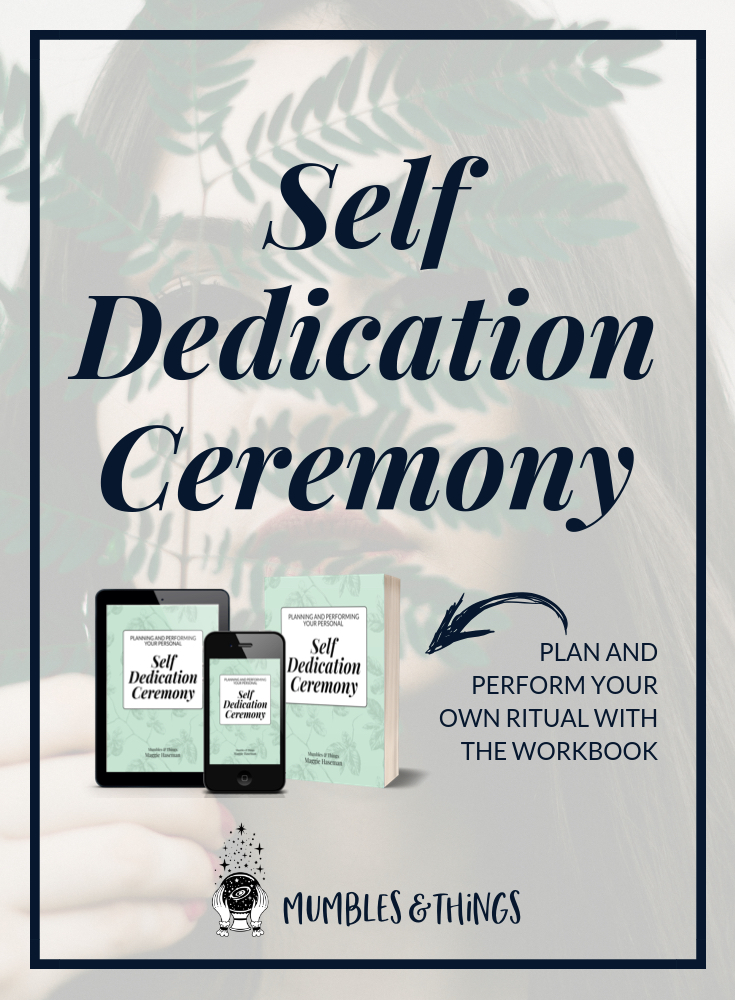
✨ Join me in the next post in this series: Self-Dedication Ceremony—planning and preparing to commit to yourself and your witchcraft practice.
✨ Want to keep growing? Join the Blog Rewards Program today and take the next step in your solitary practice.
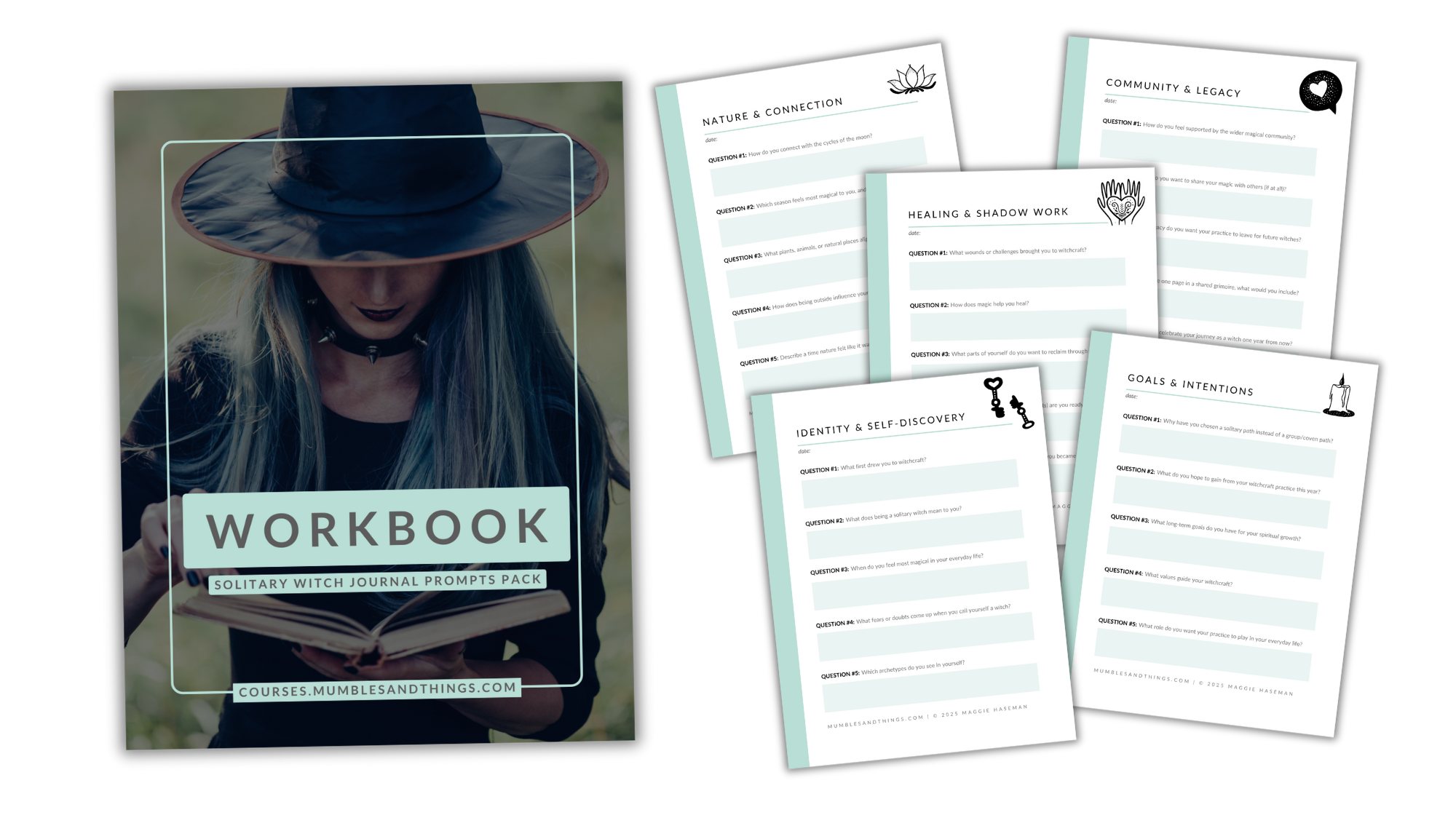
⬅️ Free Resource
Download the Solitary Witch Journal Prompts Pack—20+ guided prompts to help you explore your identity, goals, and healing journey as a self-initiated witch.
When you join the Blog Rewards Program, you’ll unlock this pack plus a growing library of free resources. It’s my way of saying thank you for walking this magical path with me.
Best of all—it’s completely free. Every new blog post unlocks another resource, so your magical toolkit keeps expanding as you learn.
This post is part of a series. Follow the entire Witchcraft 101 collection:
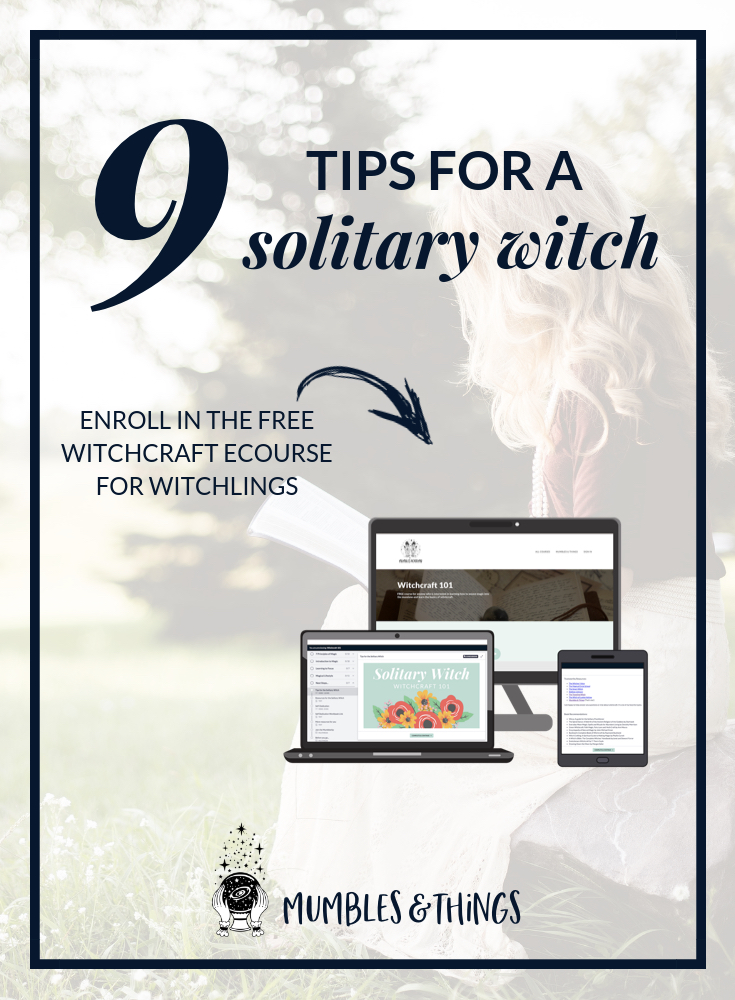


When it comes to magic…You KNOW you could be doing BIG things, but you have no idea what those things are, or worse… you just have no idea where to start! The #1 thing I hear from followers is that they want a clearly defined, STEP by STEP path to witchcraft. Meet Witchcraft 101!